Stacking Polished Metal Plates Without Scratches: The Right Release Paper for Heating Stove Production
![[Translate to English:] Petra Keller](/fileadmin/_processed_/a/1/csm_petra_keller_e44ef7ef02.png "[Translate to English:] Petra Keller")
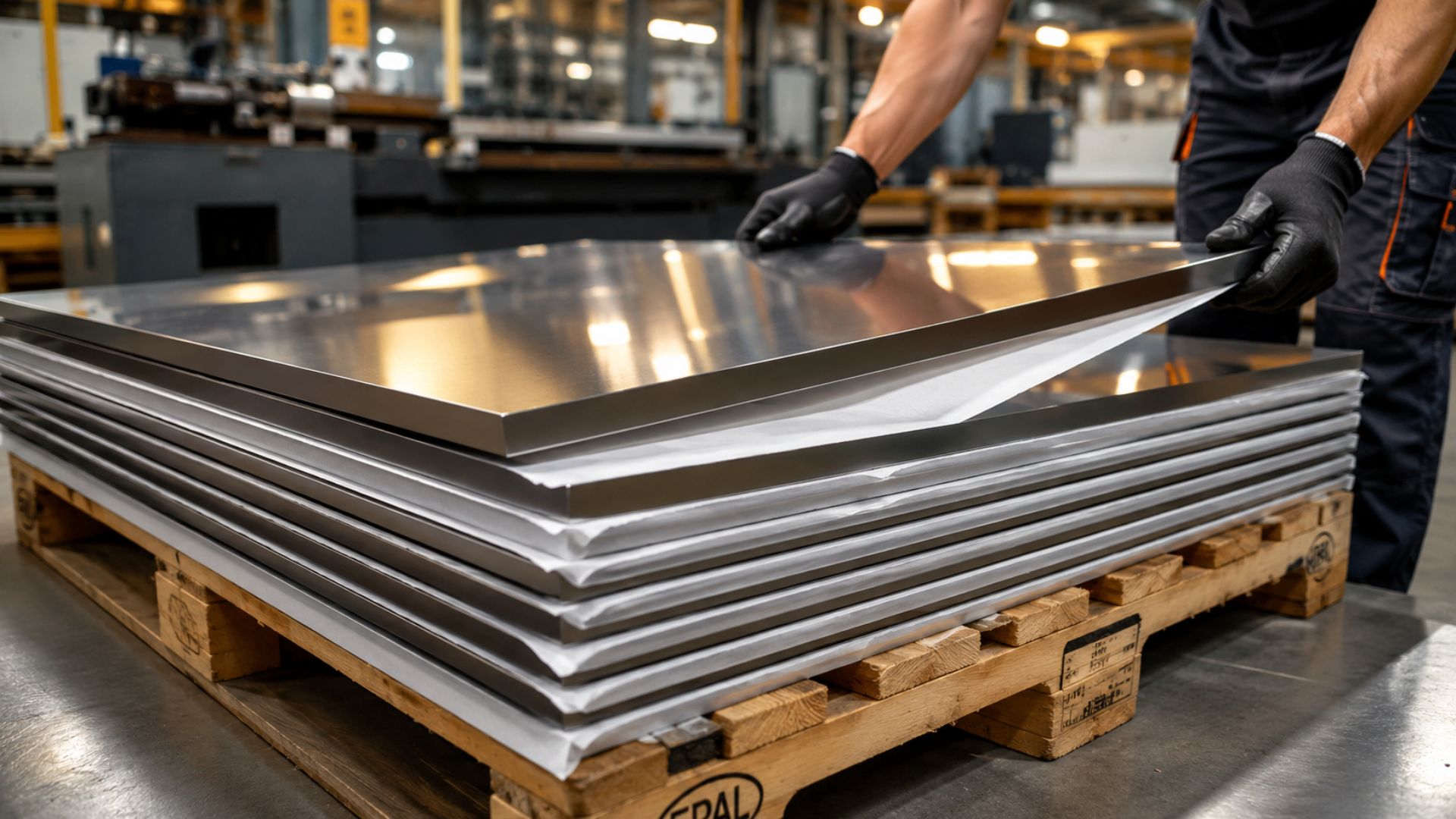
Anyone stacking metal plates or components after polishing in heating stove production knows the problem: an unsuitable interlayer – or none at all – and the carefully polished surfaces show fine scratches, pressure marks, or abrasion after stacking. Even minimal movement or dust particles between the plates can cause permanent damage. The solution lies in choosing the right interlayer: a technical release paper developed specifically for sensitive metal surfaces under industrial conditions.
The Most Important Facts About BRANOperl at a Glance
- Siliconised release paper reliably protects polished metal surfaces from scratches and pressure marks during stacking.
- Heat-resistant above 100 °C – ideal for use with components that are still warm directly from production.
- Double-sided siliconisation prevents adhesion on both contact surfaces and enables clean separation.
- Not subject to CLP labelling requirements, no SVHC substances – recyclable and safe for health.
Why Polished Metal Plates Are Particularly Vulnerable During Stacking
Polished metal surfaces are in a technically and manually refined state: every imperfection has been removed, the surface is smooth, reflective, and susceptible to scratching. This is precisely what makes them so vulnerable during stacking.
When metal plate contacts metal plate directly, the combined weight creates considerable surface pressure. Even the smallest foreign particles – dust, metal shavings, or fibre residues – act like abrasives and leave fine but visible scratches. Micromovements add to the risk: even slight vibrations during transport or when repositioning stacks can cause the plates to shift against each other, damaging the surface.
Heat as an Additional Risk Factor
In many production environments, plates arrive warm from processing or heat treatment before entering the stacking process. Standard paper or simple protective films can fail under these conditions: they deform, become brittle, lose their stability – or adhere to the surface. This makes the choice of interlayer material even more demanding.
What a Release Paper Must Deliver in Metal Processing
Not every paper is suitable as an interlayer for polished metal plates. The requirements in industrial metal processing are high – and several properties must be met simultaneously.
Temperature Resistance Above 100 °C
The release paper must remain dimensionally stable and functionally reliable even when stacked components still carry residual heat from production. Standard papers lose their stability at elevated temperatures, becoming wavy or discoloured. A technical release paper, however, maintains its structure even at temperatures above 100 °C, reliably protecting the surface.
Mechanical Load Capacity Under Pressure
Heavy metal plates generate considerable pressure within a stack. Depending on the grade, BRANOperl features specified mechanical values – including burst strength and breaking force – which ensure that the interlayer retains its shape even under high surface pressure and does not fail. Only a material with defined mechanical properties reliably prevents the interlayer itself from becoming a source of damage.
BRANOperl – Siliconised Release Paper for Demanding Production Processes
BRANOperl is a siliconised release and separation paper based on greaseproof substitute or kraft paper. It was developed to safely separate materials from one another, prevent adhesion, and protect sensitive surfaces in demanding production processes.
Structure and Material Base
BRANOperl is based on either greaseproof substitute paper or kraft paper – depending on the application requirements and desired grammage. Both base variants are characterised by high mechanical load capacity and provide a stable foundation for the silicone coating.
Double-Sided Siliconisation – Non-Stick Properties on Both Sides
BRANOperl is siliconised on both sides. This means both contact surfaces – the underside of the upper plate and the top side of the lower plate – are equally protected. The silicone layer prevents the paper from adhering to the metal surface and ensures clean separation when removing the interlayer.
Sustainability and Safety
BRANOperl is recyclable and safe for health. The material is not subject to labelling requirements under the CLP Regulation and contains no substances on the SVHC candidate list. It is therefore suitable for environments with particular requirements regarding material safety. The use of BRANOperl contributes to clean, efficient production processes – with less cleaning effort and consistent process quality.

Looking for a release paper that reliably protects sensitive metal surfaces – even under thermal and mechanical stress? BRANOperl is cut to your exact format and can be integrated directly into your production process. Get in touch – we are happy to advise you.
Contact us nowPractical Example – Heating Stove Manufacturer Protects Polished Components with BRANOperl
A heating stove manufacturer produces metal plates and components that are stacked after polishing. The surfaces are sensitive, the parts are heavy – and the plates sometimes arrive warm from processing before entering the stacking process. The challenge: the carefully polished surfaces must not be damaged during stacking or internal transport.
Initial Situation and Challenges
Before a suitable interlayer was introduced, fine scratches and pressure marks regularly appeared on polished surfaces during production. These surface defects required reworking and increased scrap rates. Standard paper used as a separating layer could not withstand the weight of the plates and deformed under heat – reliable protection was not achievable.
Use of BRANOperl – Results in Practice
By introducing BRANOperl as an interlayer, the manufacturer was able to significantly reduce surface damage during stacking. The siliconised release paper in Euro pallet format 1200 × 800 mm covers the plates completely, protecting the edges as well. The heat resistance of the material ensures that the interlayer remains dimensionally stable even with warm components, neither adhering to nor affecting the surface. The process has since run more cleanly and with significantly less reworking.
For polished metal plates, a siliconised release paper such as BRANOperl is recommended. The double-sided silicone coating prevents adhesion on both contact surfaces and ensures clean separation – without affecting the sensitive surface.
If components still carry residual heat from production, the release paper should withstand temperatures of at least 100 °C. BRANOperl is designed for use at elevated temperatures and remains dimensionally stable even under thermal stress.
Yes. BRANOperl is available in Euro pallet format 1200 × 800 mm, amongst others, providing complete coverage of stacked plates – including the edges.
Standard protective paper provides only a mechanical separating layer, but can fail under pressure and heat or adhere to the surface. Siliconised release paper such as BRANOperl additionally features a non-stick coating that reliably prevents adhesion and enables clean removal of the interlayer.
Yes. BRANOperl is recyclable, not subject to CLP labelling requirements, and contains no substances on the SVHC candidate list. It is safe for health and suitable for environments with particular requirements regarding material safety.