![[Translate to English:] Achim Hamann](/fileadmin/_processed_/1/3/csm_achim_hamann_5edf4c4ea1.png "[Translate to English:] Achim Hamann")
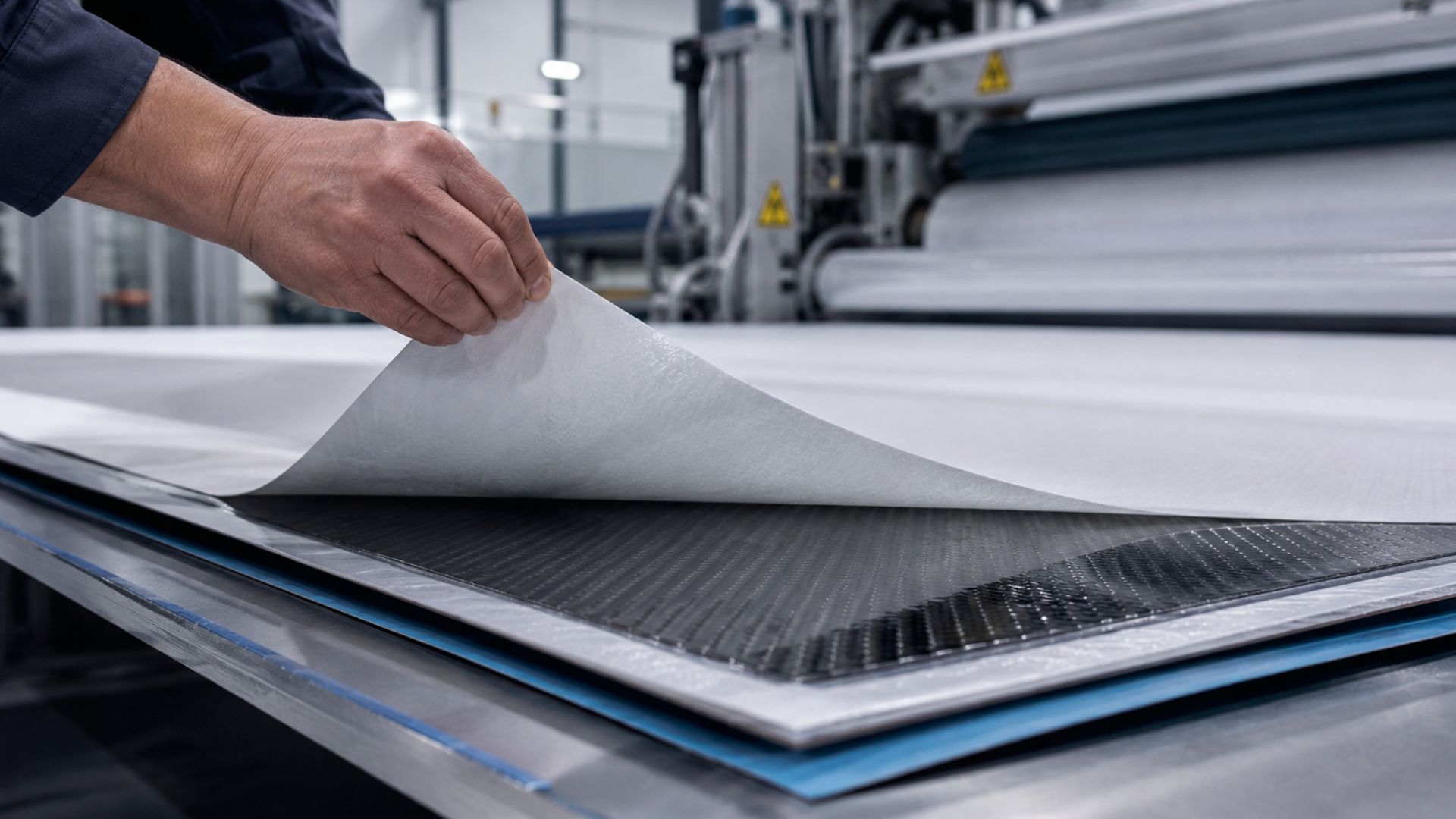
Release paper is a silicone-coated speciality paper that reliably prevents unwanted bonding between materials. Whether in the composites industry, rubber processing or label printing – wherever materials need to be cleanly separated from one another, release paper is a proven solution. BRANOpac offers BRANOperl, a high-quality, single- and double-sided siliconised release paper for industrial applications of all kinds.
The Most Important Facts about Release Paper at a Glance
- Silicone coating prevents materials from bonding – available single- or double-sided
- Suitable for thermal processes such as textile printing, lamination and pressing in industry
- Used across industries: composites, rubber, labels, printing, medical, furniture and more
- Environmentally friendly material – easy to dispose of and recycle; FSC-certified grades available on request
What is Release Paper?
Release paper is a speciality paper coated on one or both sides with a silicone layer. This coating gives the paper a significantly reduced surface energy – adhesives, resins and other tacky substances cannot permanently bond to it and can be removed without leaving any residue.
The basic principle is straightforward: whenever two materials must not come into contact with each other during a manufacturing, pressing or transport process, release paper is used as an interlayer. It protects surfaces, enables clean separation and ensures a smooth production process.
Single-sided or double-sided siliconised – what is the difference?
Release papers are available in two fundamental variants:
- Single-sided siliconised: The release effect is active on one side only. This variant is frequently used as a carrier or liner material for self-adhesive labels, adhesive tapes and self-adhesive films.
- Double-sided siliconised: Both sides of the paper are coated with silicone. This is the right choice whenever the paper is used as an interlayer between two adhesive or resinous materials – for example when pressing composite materials.
BRANOperl is also available in bleached (white) or unbleached (natural) variants, depending on requirements regarding appearance, purity or sustainability.
Release Paper, Release Liner, Peel-off Paper – the Differences
In everyday industrial use, several terms are used for the same product – which can occasionally cause confusion. A brief overview:
- Release paper is the internationally established technical term in the B2B environment. It emphasises the releasing or separating function of the paper.
- Release liner is the specific English term for carrier films and papers used in adhesive processing.
- Trennpapier is the German equivalent, widely used in the manufacturing industry. The term refers to the same function: reliably keeping two materials apart.
- Peel-off paper places greater emphasis on the peeling process itself – i.e. that an adhesive, a label or a film can be cleanly removed from the paper after application. Typical field of use: labels and stickers in the office and packaging sector.
In practice: all four terms describe silicone-coated papers with a release function. The choice of term usually depends on the industry, the application and the geographic region.
Properties and Benefits of Release Paper
High-quality release papers such as BRANOperl are characterised by a range of technical properties that make them well suited to industrial requirements:
Heat resistance and chemical stability
Silicone-coated papers are stable across a wide temperature range. This makes them suitable for high-temperature processes such as thermal fixation in textile printing, pressing operations in composites manufacturing or use as a running paper for web-shaped materials in extrusion lines. The silicone coating retains its release effect within the usual operating range, even at elevated temperatures.
Clean release properties
A good release paper leaves no residue on the materials being separated. This is particularly important in sensitive areas such as medical technology, printed circuit board manufacturing or the photographic industry, where even the smallest contamination can affect product quality.
Sustainability
Paper-based release papers are considerably easier to dispose of and recycle than comparable plastic films. BRANOperl can be used as an environmentally friendly alternative to synthetic release films and is available in FSC-certified grades on request.
Individual formats and custom printing
BRANOpac offers BRANOperl in selectable formats and quantities – including individually printed variants. This allows straightforward product identification directly on the release paper and is of particular interest for OEM customers and converters.

Looking for the right release paper for your application? We are happy to advise you individually – from material selection and special formats to individually printed release liners.
Get in touch nowAreas of Application for Release Paper
Release paper is a versatile speciality paper used across industrial manufacturing. The following overview shows the most important areas of application:
Composites and advanced materials industry
In the production of composite materials, release paper is used as an interlayer during the pressing process – before, during and after the compression of laminate panels. It prevents the layers from bonding with each other or adhering to the press tool, and ensures an immaculate surface finish on the end product.
Labels, adhesive tapes and self-adhesive films
Perhaps the most familiar application: release paper serves as a carrier for self-adhesive labels, stickers and adhesive tapes. The user peels the label from the release paper web – the paper moves on as waste while the adhesive remains fully on the label. BRANOperl is suitable both as peel-off paper for labels and as release paper for adhesive tapes.
Rubber processing
In the manufacture of rubber and raw rubber products, web-shaped materials are separated by release paper during rolling, storage and transport. It prevents the sensitive layers from sticking together and allows straightforward, residue-free further processing.
Textile printing and thermal processes
In textile printing – particularly in transfer printing and the thermal fixation of printing inks – release paper is used as a transfer paper and separating layer. More information can be found under BRANOperl: Release Paper in Thermal Processes.
Printing industry: screen, pad and foil printing
In screen and pad printing as well as foil printing, release paper serves as a transfer paper to transfer printed motifs from the printing forme to the substrate. It is also well established as a running paper for web-shaped materials in continuous printing processes.
Medical technology and photographic industry
Self-adhesive wound dressings, medical plasters and wound pads use release paper to protect the adhesive until the point of use. In the photographic industry, it protects self-adhesive photographic materials during storage and transport.
Furniture and construction industry
As a protective layer for metal and wooden surfaces, in fireplace construction or for lacquered ceiling systems, release paper provides mechanical protection combined with a release function, and can be removed without leaving any residue. Examples: scratch protection in fireplace construction and scratch protection for lacquered ceiling systems.
BRANOperl – the Siliconised Release Paper by BRANOpac
BRANOperl is the single- and double-sided siliconised release paper from BRANOpac GmbH. It combines outstanding release properties with broad application flexibility and is successfully used across numerous industries.
Product features at a glance
- Single- or double-sided silicone coating
- Available in bleached and unbleached variants
- Good heat resistance for thermal processes
- Environmentally friendly material, easy to dispose of and recycle
- Custom printing available
- Selectable formats and quantities
- Excellent clean release properties without residue
FAQ: Frequently Asked Questions about Release Paper
Both terms refer to the same type of product. Release paper is the general term for silicone-coated paper with a separating function. Release liner is used more specifically in the context of adhesive processing, where the paper acts as a carrier for adhesive tapes, labels or self-adhesive films.
Release paper is used across a wide range of industries – including the composites and advanced materials industry, rubber processing, the printing industry (screen, pad and foil printing), medical technology, the textile industry, and the labels and adhesive tapes sector.
Yes – heat-resistant grades such as BRANOperl are suitable for thermal fixation processes in textile printing as well as pressing operations in the composites industry. The silicone coating retains its release effect within the usual operating range, even at elevated temperatures.
Single-sided siliconised release paper has a release effect on one side only – ideal as a carrier for labels and adhesive tapes. Double-sided siliconised paper has a release effect on both sides and is used as an interlayer wherever adhesion on both surfaces is undesirable, for example when pressing laminates.
For enquiries about BRANOperl – whether standard formats, special quantities or individually printed variants – the BRANOpac team is happy to help. Simply use the contact form on branopac.com.