
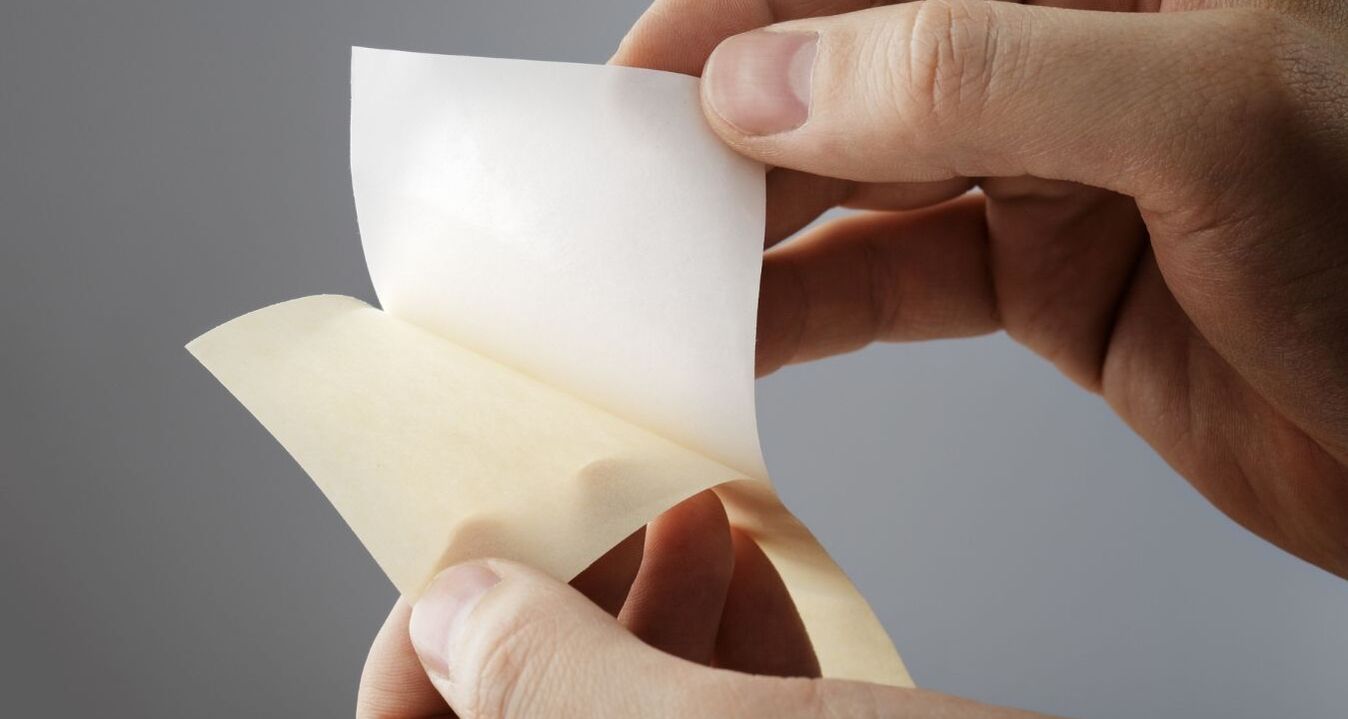
Release paper is used in many industrial processes – often unseen, but indispensable. Whether in composites processing, the rubber industry or the manufacture of labels and plasters: release paper is used wherever materials need to be reliably separated from one another or sensitive surfaces need to be protected as an interlayer. This article explains what release paper is, what types are available, what properties characterise it and in which industries it is used.
The Most Important Facts about Release Paper at a Glance
- Release paper protects surfaces as an interlayer and prevents unintentional adhesion – without leaving residue and with process reliability.
- Siliconised release papers are coated on one or both sides and are suitable for a wide range of industrial applications.
- The correct release value (release force) is crucial for reliable processing – from labels to press processes.
- Paper-based release materials can be recycled or thermally recovered depending on the degree of contamination.
What Is Release Paper? Definition and Basic Principle
Release paper – known in German as Trennpapier – is a specially coated paper with a non-stick surface. It fulfils two fundamental functions: on the one hand, it prevents materials from unintentionally adhering to one another or sticking to moulds and tools. On the other hand, it protects sensitive surfaces as an interlayer against scratches, contamination or mechanical damage – for example during the transport or storage of panels, profiles or coated components.
The non-stick effect is created by a thin coating applied to one or both sides of the base paper. Silicone is the most commonly used coating material, as it is chemically stable, heat-resistant and suitable for food contact. In addition to silicone, other specialised coating systems are used depending on the application.
The basic principle is always the same: the release paper acts as a protective layer between two materials – and can subsequently be removed without leaving any residue.
Release Paper, Baking Paper, Greaseproof Paper – What Is the Difference?
These three terms are often confused in everyday use. Baking paper is a form of release paper specifically designed for food applications and often made from greaseproof paper. Greaseproof paper, in turn, is a paper densified by chemical treatment with natural moisture resistance – it does not necessarily need to be siliconised. Industrial release paper, however, is designed for technical precision: defined release values, heat resistance and reusability are the key priorities.
Types of Release Paper: Single-Sided, Double-Sided and Uncoated
Release papers can be distinguished by their coating and base material.
Single-Sided Siliconised Release Paper
With single-sided siliconised release paper, only one side is coated with a silicone layer. This variant is used wherever a material needs to be protected or separated from an adhesive surface – for example as a carrier paper for labels, adhesive tapes or self-adhesive films. The uncoated reverse side can be printed or further processed.
Double-Sided Siliconised Release Paper
Double-sided siliconised release paper has a non-stick layer on both sides. It is used when the paper lies between two tacky materials – for example for the separation of rubber sheets, adhesive tape rolls or self-adhesive foams. The two sides can have different release values to ensure a defined peeling behaviour.
Base Materials and Coating Types
Various papers are used as base materials, such as glassine paper (a particularly smooth, dense paper) or kraft paper; in some applications, plastic films such as polyester are also used. In most industrial applications, the coating consists of silicone, as it offers high temperature resistance, chemical inertness and good compatibility with many adhesives. For particularly demanding applications – such as in the food or medical technology sectors – only appropriately certified silicone types are used.
Properties and Quality Characteristics of Release Paper
The quality of a release paper can be assessed based on several technical characteristics.
Release Value (Release Force)
The release value – also known as release force – describes how much force is required to peel the release paper away from an adhesive or material. It is expressed in cN/cm or g/cm and can vary greatly depending on the application: a label liner requires a low release value for easy peeling, whilst a release paper for press processes must offer greater resistance. Many manufacturers offer papers with adjustable release values.
Heat Resistance
For thermal processes – such as press processes, lamination or transfer printing – heat resistance is a decisive selection criterion. Siliconised release papers are suitable for many thermal processes and can withstand elevated temperatures depending on the version. The exact temperature resistance is product- and application-specific and should always be clarified with the manufacturer.
Grammage and Format
Release papers are available in various grammages and formats – as roll goods or sheet goods, and in some cases also as individual cut pieces. The choice of the correct grammage influences stiffness, handling and suitability for automated processes.
Sustainability and Certifications
Release papers from sustainably managed forests with FSC certification are increasingly in demand. Paper-based release materials can – depending on the degree of contamination – be recycled or thermally recovered, making them often a more ecologically advantageous choice compared to plastic film liners.
Applications: Where Is Release Paper Used?
Release paper is indispensable in a wide variety of industries and processes – both as a release aid for tacky materials and as a protective interlayer for sensitive surfaces.
Composites and Composite Materials
In the manufacture of composite materials – such as carbon fibre reinforced plastics (CFRP) or glass fibre reinforced plastics (GFRP) – release paper is used as an interlayer before, during and after the pressing process. It prevents resin layers from sticking to the press moulds or adjacent layers, and enables the clean removal of finished components.
Rubber Processing
In rubber processing, release papers are used as interlayers between freshly rolled raw rubber sheets to prevent them from sticking together on the roll or during transport. They also serve as a lining for moulds and press matrices.
Labels, Adhesive Tapes and Self-Adhesive Materials
As a carrier paper for labels and stickers, the release liner protects the adhesive layer until the moment of application. The liner can be easily peeled away without leaving residue on the label or the substrate.
Surface Protection and Scratch Protection as an Interlayer
Release paper is an excellent protective interlayer for sensitive surfaces – regardless of whether adhesives are involved. In the furniture industry, for example, it is placed between panels, fronts or lacquered surfaces to prevent scratches during transport or storage. The same applies to metal and glass surfaces, coated components or semi-finished products that need to be stacked or rolled.
Medical Applications
In medical technology, release papers are used for transdermal patches, wound dressings, electrodes and self-adhesive bandaging materials. Particularly high requirements apply here with regard to the purity and biocompatibility of the silicone coating.
Print Industry: Transfer Printing, Screen Printing, Pad Printing
In transfer printing, release paper serves as a temporary carrier for print motifs that are subsequently transferred to textiles or other materials by heat. In screen printing and pad printing, it enables the processing of pressure-sensitive adhesives without contaminating machinery.
Further Applications
Release paper is also used as a process liner for web-shaped materials, in ski manufacturing, in the production of printed circuit boards and in the construction industry – for example in the processing of bitumen and potting compounds.

Are you looking for a reliable release paper for your application? BRANOpac is happy to advise you – from selecting the right coating to individual formats and quantities. Get in touch with us.
Contact us nowBRANOperl – the Release Paper from BRANOpac
BRANOperl is the single- or double-sided siliconised release paper from BRANOpac. It is available as a bleached or unbleached variant and is characterised by excellent release properties and good heat resistance.
A particular strength of BRANOperl is its versatility: it is suitable for industrial processes as well as for technical special applications – from composites processing and transfer printing to scratch protection in the furniture industry. The siliconised surface supports stable and clean production processes and can help to reduce adhesion to machine components and minimise cleaning effort. BRANOperl can also be individually printed on request and is available in selectable formats and quantities, enabling economical and flexible procurement. After use, it can – depending on the degree of contamination – be recycled or thermally recovered.
Typical areas of application for BRANOperl include:
- Interlayer during the pressing of composite materials
- Release paper for labels and self-adhesive materials
- Transfer paper in textile and film printing
- Release paper in rubber processing
- Scratch protection for metal and wood fronts in the furniture industry
- Process liner for web-shaped materials
Choosing the Right Release Paper – What to Look Out For
The choice of the right release paper depends on several factors:
Application temperature: If elevated temperatures are reached, the coating must offer adequate heat resistance. The exact suitability should be checked on a product-specific basis.
Release value: Depending on the adhesive and process, a specific release value is required. A value that is too low can lead to unintentional peeling, whilst a value that is too high makes processing more difficult.
Single-sided or double-sided: If the paper lies between two adhesive materials, double-sided siliconisation is required. For simple protective or release functions on one side, single-sided coating is often sufficient.
Format and processing form: Roll goods are suitable for automated processes, whilst sheet goods are better suited for manual applications or special formats.
Certifications: For food or medical applications, appropriate documentation of food compatibility or biocompatibility is required.
In cases of uncertainty, consultation with the manufacturer is recommended in order to find the optimum specification for the respective application.
Baking paper is a special form of release paper designed for food applications. Industrial release paper, however, is designed for technical requirements – with defined release values, heat resistance and suitability for automated production processes.
Double-sided siliconised release paper is used wherever the paper lies between two tacky materials – for example for the separation of rubber sheets, adhesive tape rolls or self-adhesive foams.
Yes. Release paper is frequently used as a pure protective layer – for example between stacked metal panels, lacquered furniture fronts or coated components, in order to prevent scratches and surface damage during transport or storage.
Yes, many manufacturers offer the option of individually printing single-sided siliconised release paper – for example with logos, product information or warning notices. The uncoated reverse side is well suited for flexo printing.
FSC-certified release paper comes from sustainably managed forests and meets the requirements of the Forest Stewardship Council. It is an ecologically advantageous choice for companies with sustainability objectives.
For rubber processing, double-sided siliconised release paper is generally used, which prevents raw rubber sheets from sticking together on the roll or during transport. Good release properties and sufficient mechanical stability are important factors here.